
Enhancing Cultural Narrative and Accessibility through VR/AR
This session explores the intersection of high-fidelity 3D digitization and immersive storytelling. As physical sites face threats from climate change, conflict, and over-tourism, Virtual Reality (VR) offers a powerful medium for “visualization digital twin”, digital preservation and democratic access. The scope encompasses the entire pipeline—from advanced photogrammetry and LiDAR data acquisition to the psychological impact of presence in virtual historical environments. We aim to discuss how VR can move beyond simple visualization to become a tool for deep pedagogical engagement and emotional connection with our global past..
The session will consist of research work/paper presentations.
Note: The roundtable will specifically focus on the ethical implications of digital reconstruction and the challenges of maintaining historical authenticity in gamified environments.
Special Session Chairs:
Sorin Herban & Massimiliano Pepe
Session Organizers:
- Professor Emmanuel Maravelakis (Hellenic Mediterranean University, Greece)
- Professor Domenica Costantino (Polytechnic of Bari, Italy)
- Dr. Vincenzo Saverio Alfio (Polytechnic of Bari, Italy)
- Professor Spartak KUÇAJ (Polytechnic University of Tirana, Albania)
- Professor Oliva Menozzi (G. d’Annunzio University of Chieti-Pescara, Italy)
- Professor Krzysztof Narloch (University of Warsaw-Center for Research on the Antiquity of Southeastern Europe, Polond)
- Associate Professor Athanasios Mailis (University of Crete, Greece)
- Associate Professor Beatrice Vilceanu (Politehnica University Timisoara)
- Associate Professor Andrei Crisan (Politehnica University Timisoara)
- Professor Camen Grecea (Politehnica University Timisoara)
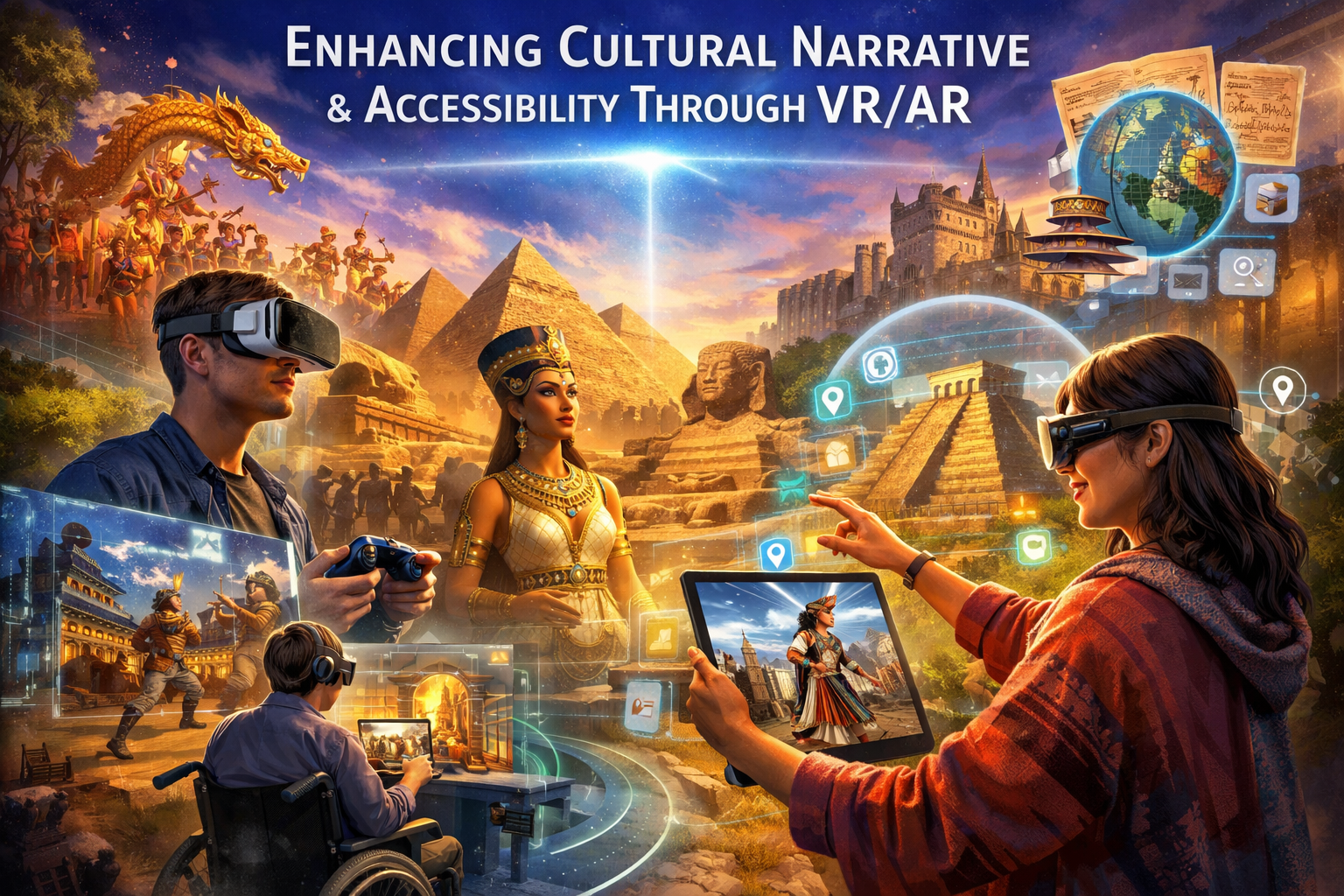
Expected contributions:
Papers to be presented in the special session cover topics related, but not limited, to:
- Virtual Reconstruction & Digital Twins: High-resolution modeling of “at-risk” archaeological sites and monuments.
- Narrative Design for Heritage: Techniques for storytelling in VR that respect historical accuracy while maintaining user engagement.
- Intangible Heritage Immersion: Using VR/AR to capture and transmit traditional dances, crafts, oral histories, and ritual practices.
- Accessibility & Inclusion: VR solutions for remote access to heritage sites for individuals with limited mobility or geographic constraints.
- Haptic & Multi-sensory Interaction: Integrating touch, soundscapes, and olfactory cues to enhance the realism of cultural simulations.
- User Experience (UX) Research: Empirical studies on learning outcomes, empathy, and “presence” within virtual museums.